Bighorn Flashback :: [Supplemental]


Into the Bighorn :: 2018

— — — — — — —

"I’m very solitary, that’s all . . . I can’t dismiss it. Inside, I’m very much in communication with a lot of people and things who absolutely don’t know I’m in communication with them." Jean-Luc Godard

— — — — — — —

Songs :: Rocky Mountain Way by Joe Walsh, Voices Inside My Head by The Police, Travelin’ Light by J.J. Cale, High and Dry by Radiohead, and These Shadows by Wooden Shjips

© C. Davidson

Lake Missoula


Glacial Calving :: Image – Video Still from Montana Natural Center

Potomac :: Image – Google Earth

The older I get the more nostalgic and emotional I’ve become. I think that’s common for a lot of people. My father and mother did and I’ve spoken with friends who are older too and they said the same thing. One has a daughter who left for her first year of college and everyday for weeks after he’d spend time in her room because he missed her so much. I was surprised he told me about such an intimate moment and relieved he did because I experienced that too. For months after our daughter left for her gap year to the other side of the world, I took much longer naps, welled with tears, told stories about her to anyone who’d listen, and made certain the plants she left behind were watered.

As much as I’m nostalgic about people and animals, I’m just as nostalgic about places—places I’ve lived, read about, and some just briefly passed through. Places like Jordon, Montana where I refueled once, parts of Ohio, white sand beaches in Florida, and the drive into the Potomac east of Missoula with a sister and brother-in-law five decades ago. I hopped into the bed of the pick-up truck once we exited the highway and headed south deeper into the valley. The smell of pine and sweetgrass was fresh and the Doobie Brothers were loud enough for me to hear them playing in the cab. It was a perfect day and our trail of road dust through the lush green pastures revealed our path that led straight into the mountains and cooler air.

I spent a lot of time in Missoula during my youth, sometimes visiting for weeks. I heard the new Fleetwood Mac album in 1975 for the first time sitting on a couch in a house on Pine Street one summer. Fleetwood Mac was playing at the university field house the following night and everyone I knew in town was going. Halfway through the concert, I found myself on someone’s shoulders not far from the front of the stage and almost eye level with Stevie Nicks and Lindsay Buckingham. She wore a flowing white skirt, white top, tall boots, sleeves that looked like scarves, and a tambourine in one hand.

The railroad bridge we jumped off the next afternoon smelled of creosote and spanned the Clark Fork River. It was fast with rapids, ragged boulders, rocky beaches, and cottonwood trees along the shore. There was a deep green pool directly below the bridge and we were there to jump into it. We accessed the road level tracks high above the river and from there, shimmied up a diagonal timber truss to the top where we balanced ourselves. I squatted nervously there for at least ten minutes before gathering the courage to jump. Eventually I did and entered the water yelling feet first, then surfaced and dog paddled quickly to shore to avoid being swept downstream because I wasn’t a strong swimmer.

I didn’t know then that this valley I spent so much time in had contained a giant two-thousand-foot-deep lake once and Mount Sentinel and Mount Jumbo were underwater. I didn’t realize that the horizontal lines etched on many of the foothills in the area were where Lake Missoula had once lapped against their shores as the water drained, and refilled dozens of times over thousands of years. It’s hard to comprehend the scope of those massive geological changes, but that history pales compared to my memories of the sweet aroma of herbs and teas my sister-in-law and brother filled their houses with during the nineteen-seventies.

For Carol, Ray, Marilyn, Russ, Scott, Sharon, Tim, Vicki, Buck, Lindy, and various friends, friends of friends, and anonymous citizens of Missoula during the nineteen-seventies.

Songs :: Indian Summer by Joe Walsh, Show Me Some Affection by Dave Mason, South City Midnight Lady and Without You by The Doobie Brothers, Wooden Ships by Jefferson Airplane, See The Changes by Crosby, Stills & Nash, and the entire Fleetwood Mac album from 1975

© C. Davidson

Wisconsin :: [Supplemental]


— — — — — — —

"Yo, wake up every morning. Thank the Lord ‘cause I know I'm blessed. Yeah. We can't let the way the world is shaking break us down.” Mayowa

— — — — — — —

Songs :: Everyday Life by Coldplay, Wagon Wheel by Old Crow Medicine Show, Meadows by Joe Walsh, and Transcendental Blues by Steve Earle

For Todd and Paula

© C. Davidson

T u l s a


Sometimes road trips are functional, like distant errands, rural work meetings, or to visit friends in Wisconsin. Other times they’re much longer like during vacations. All of them lift my mood and change my perspective, but the long ones can transform me. I’ve never finished a long road trip and felt it wasn’t a good thing to have done. There might have been times it felt hot and endless, sketchy, even risky, but I’ve always felt better afterwards because traveling through time and space always feels good. Carl Sagan, Stephen Hawking, Andrea Ghez, and other notable astrophysicists have spent their careers researching and informing us about spacetime, even floating weightless to show us how things change out there. Driving a car at interstate speeds doesn’t allow us to escape earth’s gravity, or slow the aging process, but it’s still time travel.

We were surprised to discover that Tulsa is almost due south from the Twin Cities, along with Des Moines and Kansas City. It’s a north-south corridor of the country that we hadn’t explored before. We arrived in West Des Moines at dinner time and ate Mediterranean food near the shore of a small city lake. Then drove to Kearney, Missouri north of Kansas City and spent the night. The next morning my wife woke early, had the continental breakfast, and walked the neighborhood while I slept in. We grabbed coffee and food at a Filipino kitchen located in a mall parking lot, drove into Kansas City, and ate on the enormous green lawn at the Nelson–Atkins Museum. She suggested we stop there when planning our trip and showed me their website. It’s a classic Beaux-Arts building from 1933 and looks like many other museums from that period. Then we noticed there was a modern addition to the museum as well, and it was designed by Steven Holl Architects, one of my favorite studios. After we finished lunch, we walked through a variety of gorgeous contemporary exhibitions inside the partially subterranean Bloch addition and then explored the grounds. Before leaving town, we drove by the nearby Kansas City Art Institute where professors I used to know had attended. Then we refueled, and bought snacks before driving further south.

Visiting Tulsa has been on our list for years. We have friends who moved there decades ago, and we’ve always wanted to visit them. We finally did and were able to spend a few hours with them touring the city, reminiscing, sharing stories about their dog Bailey who died, and eating Italian food for dinner. My wife became a virtual member of a church located there too and has become more involved since the pandemic. She was overdue to visit her newest church friends and colleagues in person, so it was the perfect trip to accomplish both. The night we arrived we drank wine with a new friend in her screened porch lined with party lights and candles near softly lit shrubs and trees that glimmered in the motionless blue pool. The community affirmed their affection for my wife and demonstrated that her place in Tulsa isn’t only virtual, it’s local too. She read a poem during services, we walked through the lush Gathering Place near the Arkansas River, visited the Greenwood District, followed multiple tornadoes north through Iowa on our return, and finally arrived home where time felt different and noticeably compressed.

Songs :: Hello In There by John Prine, Like a Ship by Pastor T.L. Barrett & The Youth for Christ Choir, (Cross the) Heartland by Pat Metheny Group, Take Me Back to Tulsa by Bob Wills and His Texas Playboys, and Chinese Cafe/Unchained Melody by Joni Mitchell

© C. Davidson

Temptation :: [Supplemental]


Temptation

Songs :: I Didn’t Mean to Turn You On by Robert Palmer, Lowdown by Boz Scaggs, Hunger Strike by Temple of the Dog, Why Can’t I Touch It? by Buzzcocks, and Early Days by Paul McCartney

© C. Davidson

Stories


She called me from the cabin and I could hear her friends’ voices in the background. I pictured them gathered in the kitchen, or around the coffee table near the stone fireplace working on a puzzle. I sipped afternoon coffee on our deck a thousand miles away next to the Goldenrod and Black-Eyed Susan’s growing next to me. The sun disappeared behind our broad green umbrella while she told me about their day and revelations about our relatives and their connection to her friends in the room. Clouds dimmed the sun, my coffee cooled, and I remembered when she was four and we talked through cans connected by a string. We nested in her fort built of sheets, blankets, and chairs and lit the inside with two flashlights and one small battery lantern that cast shadows and shapes that moved and changed.

After we shut down her fort for the night, we usually read two books from our standard rotation of dozens. One was often a longer Dr. Seuss book, or a chapter from the one about the people who made doughnuts because the illustrations made us crave doughnuts, and sometimes we read Old Hasdrubal and the Pirates. I usually hid the later book at the bottom of her large piles of books after she fell asleep because I didn’t like to read it. I couldn’t pronounce the protagonist’s name easily, and I was uncomfortable with the story. I thought maybe she’d forget about it, but it always reappeared because she’d found it. She never asked me where it was and I didn’t admit to hiding it. Then she’d get into her bed, settle in and reflect on her day. Sometimes we told each other the stories we’d invented together.

One involved an enormous village of mice that lived in our detached garage. They were quiet by day and active at night. Our visits were random, but they’d always be there and seemed to expect us. We didn’t interact with them much. We’d sit for a long time though just watching and clapping while they performed with miniature acrobatic equipment, circus animals, and special lighting effects.

Another story involved a small family of deer that lived by the lake near the family cabin. Sometimes we’d see them when we canoed close by. There were large areas of lily pads and shallow grasses near the shore that brushed against the bottom of the canoe, so they always heard us before we saw them. Just beyond the beach was a doe, a buck, and a fawn staring back at us. They seemed to expect us just like the mice did. They usually invited us to join them, so I beached the canoe and helped my daughter out. We walked to a small clearing not far from shore, protected by pine trees, huckleberry bushes, with two logs for sitting. The buck stood at the opposite end of their cozy clearing watching us, and the doe and fawn laid down in the soft, thick grass in front of him near their well-tended fire. The doe asked us questions about our cabin, others in our family, and how long our visit was this year. We asked them questions about their daily routines, if they’d visited Morrell Falls, or the giant Larch tree recently, and if anyone else knew they lived here. They said no one else knew and if other people passed by they became invisible. We never asked how they could magically vanish because we didn’t think it was unusual.

Songs :: Plains (Eastern Montana Blues) by George Winston, Side Tracked by Dave Mason, Here We Go by Joe Walsh, June Hymn by The Decemberists, and Cool Water by Joni Mitchell

© C. Davidson

August Wednesday:: [Supplemental]


August

Songs :: Wharf Rat by Grateful Dead, Fight for Your Right by Beastie Boys, Venture by Lanterna, Talkin’ Bout A Revolution by Tracy Chapman, and Powderfinger by Neil Young and Crazy Horse

© C. Davidson

Missing It a Little All the Time


A few months ago, I had a routine check-up with my dentist who’s a dental student at the University of Minnesota. He was born and raised in Hamilton, Montana and is an accomplished collegiate golfer. The student working in the cubicle next to us was also from Montana and a collegiate golfer. It’s less and less unusual to meet someone from Montana, but meeting two dental students on a floor of fifty other students, both collegiate golfers, on the same day is unusual. He said he and his wife, a law student who’s also from Hamilton, plan to move back there after they graduate because they miss it. If not their hometown, they hope to live in a different small town that needs one dentist and one lawyer.

That led us to reminisce about other towns in Montana we both remember, and how the entire state has changed over the years. He said he doesn’t recognize Bozeman anymore and that he’s heard it’s called the ‘New Aspen’. A friend who’s lived there multiple times over many decades disagrees. She’s heard that nickname too, but thinks the other nickname ‘BozeAngeles’ is a more accurate description.

Our conversation caught me off guard. With the exam light inches from my face and devices wedged in my frozen mouth I started to drift. Sometimes I drive by specific places when I’m in Bozeman, places I’ve lived, where friends have lived, main street, the campus bookstore, the Pickle Barrel, and to see if the Far-Out House still stands. I even stopped by the art and design building the last time I drove through. I parked, stood on the front lawn, and called a friend who also went there. We reminisced and I described how the arts and architecture complex looked the same on the outside. “Did you go inside?” he asked. “No, but I did fifteen years ago for some meetings. The inside is mostly the same too, but I still didn’t recognize it. I felt out of place.” Our conversation shifted to 1980 when Mount St. Helens exploded. The cloud moved east, and three days later, ash fell and collected like snow right where I stood.

After my dental appointment, I walked to a distant parking ramp because the closest one is always full and street parking is never available. I hadn’t been on this part of campus for a while but I noticed the corner deli where I’d received a call from my wife many years ago. I was getting coffee, and she was filling me in because I’d just missed the visit by her doctor and his team. They discovered what was wrong, its critical state, and how they planned to proceed with her the following morning. Fear and guilt washed over me again because I wasn’t in the room with her at the time. Then I thought about my dentists future and the views he’d enjoy again when he returned to the Bitterroot Valley.

He asked me if I missed Montana. I said “I do—a little all the time.”

Songs :: The Boy In the Bubble by Paul Simon, Clay Pigeons by John Prine, Small Town by Aaron Espe, Goin’ Back by Neil Young, and Rocky Mountain High by John Denver

© C. Davidson

Hiawatha :: [Supplemental]


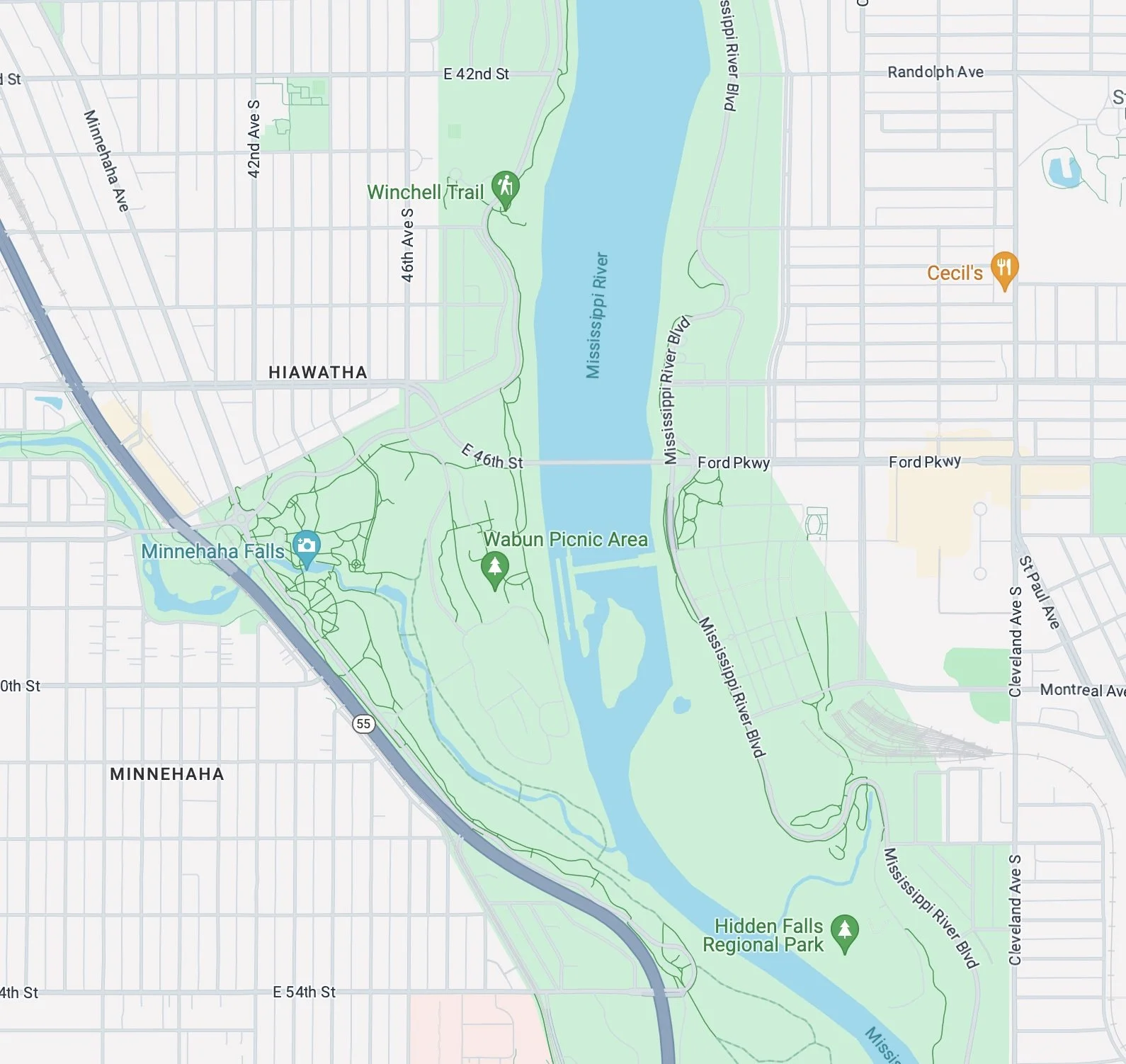
Hiawatha :: 4 July – 10:25:50 pm

Songs :: People Have the Power by Patti Smith, and Shaking the Tree by Peter Gabriel

© C. Davidson

Glen


44°54'46.8"N 93°12'25.6"W

This glen isn’t in Scotland, but when I closed my eyes and smelled the air, I imagined it could be. I don’t know if it would feel more like the Highlands, the Lowlands, or maybe in-between. I’ve never visited, but our family has roots in that part of the world, so it’s a place I think about occasionally. The earthy smell reminded me of Florida after an afternoon storm too, and even a scene from the film Spirited Away. The path into the grove was only visible because of the way different plants reflected the light.

I was told a story when I was in middle school about a hook man in Wadsworth Park located on the edge of my hometown. He targeted lovers who were alone in their car at night. He almost succeeded once but as he approached the couple’s car, the driver noticed him at the last second and quickly rolled up his window trapping the hook man’s arm. As they sped away, only the hook was left dangling from the car window. I never knew if it was true, but because of that story and the fear of the hook less hook man, I never ventured into the overgrown park, but I always stared hard into it when I drove by, looking for the slightest movement.

Here, I follow the barely defined path into the deep shade ideal for ticks. They aren’t deer ticks, the scary ones, so I wasn’t worried. Those start to appear further east in Wisconsin. After pushing aside low tree branches and walking through shrubs, plants, and shade, it slowly got brighter and transitioned into tall grass, the sound of moving water, and louder birds. The change from light, to dark, to light again, felt like a living garden gate to a green room on the opposite side. All those other places, those other memories didn’t go away as I stood in the small meadow, but they receded. Now it was about the owl I hadn’t seen until it turned towards me with deep blue above the trees.

Songs :: The Boy In the Bubble by Paul Simon, On The Road To Find Out by Cat Stevens, and For What It’s Worth by Buffalo Springfield

© C. Davidson

Happening :: [Supplemental]

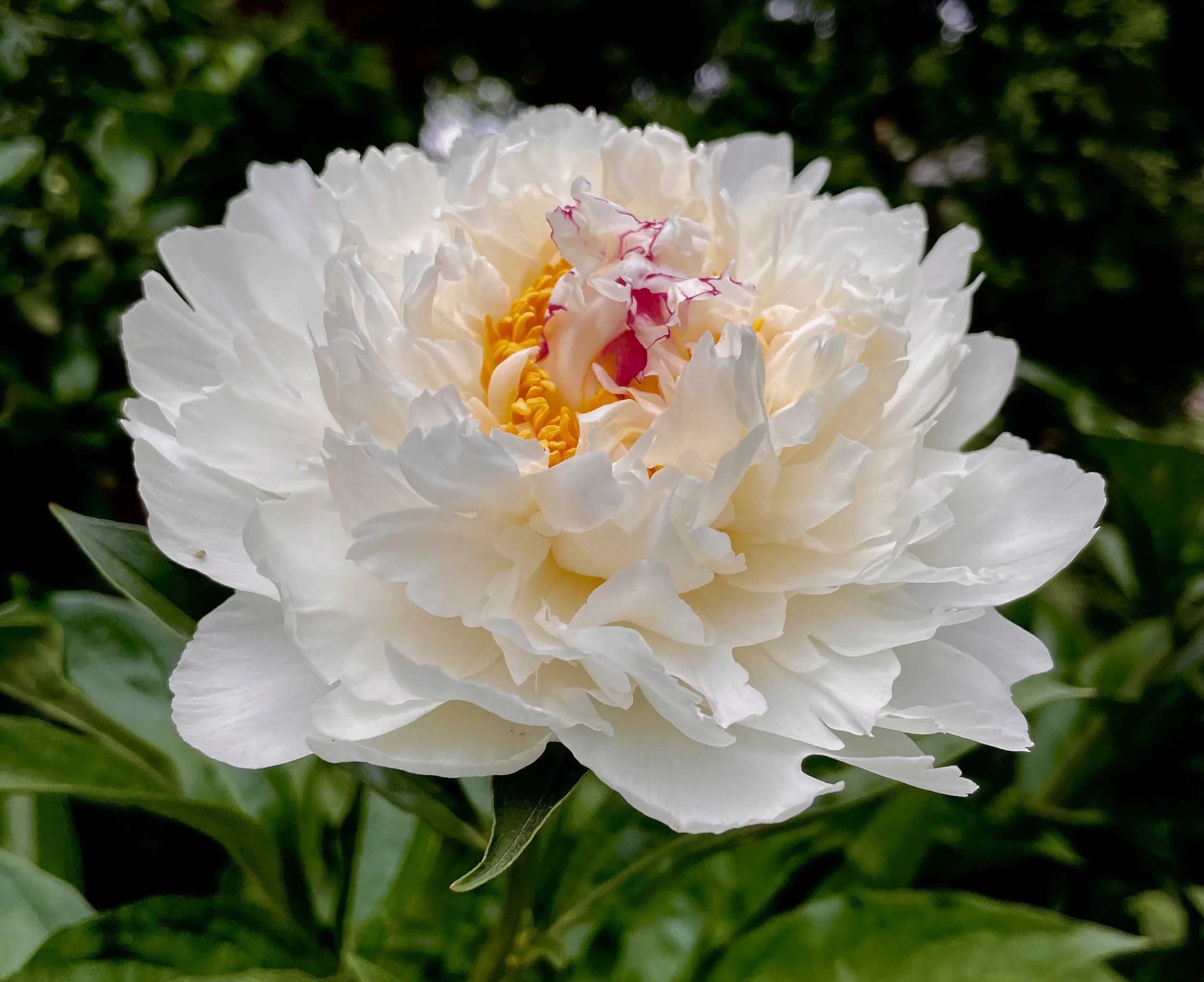
Southside Peonie

Songs :: Home by Moontricks, Desert Skies by The Marshall Tucker Band, and Goin’ Back by Neil Young

© C. Davidson

Smith Hill


I did laundry on Saturday afternoons every couple of weeks and looked forward to it because things felt different while doing it, and afterwards too. It was a reset. It was empowering to complete a defined task from beginning to end in a single afternoon, unlike everything else that was filled with uncertainty and infinity. Laundry on Smith Hill, solo bike rides, rare weekend nights with friends, and grocery shopping at Star Market were the only distractions I needed. If it was a gray day, even drizzling, I enjoyed laundry day even more because that’s the best time for inside looking out chores, especially at the laundromat.

I had a large backpack which could hold everything if I stuffed hard, with room in the top pocket for odds and ends including my Walkman. After packing, I rolled my bike through the foyer and heavy double doors with intricate frosted glass patterns, to the long front porch of the brick house my apartment was in. Then I cued the volume to the Special Beat Service disk. Once I put the Walkman in the top pocket of my backpack, I couldn’t access the controls while riding, so I selected the song Save It for Later, put it on a loop and left a gap in the pocket for the earbud cord. It was the perfect song for the ride to and through the Smith Hill neighborhood. There was a short steep downhill onto the flats across two streets, a boulevard park, the thin Providence River, then a long gradual uphill grind past the McKim, Mead & White designed State House from 1895.

I spent hours with strangers doing their laundry too. I drew, watched pedestrians pass by, and eventually crossed the street to get hotdogs from Baba’s for lunch, or dinner. The neon, murals, chaotic signage, and dense typography were as comforting as the dogs. The Smith Hill neighborhood could have been in a different northeast town. It’s difficult to describe a New England city neighborhood, but there’s a similarity, a common architecture of three-story multi-family homes, in a dense urban neighborhood that was new to me.

In those days, I was unreachable unless I was at my apartment, or at the studio. Personal computers as we know them barely existed. Laptops, tablets, and smart phones were science fiction so when I returned home there wasn’t even a blinking answering machine, only a heavy black rotary phone that I’d owned since Montana. I liked being unreachable. After I finished, I stuffed my clean laundry back into my pack and road slowly back through the neighborhood, savoring dusk and the smell of dryer sheets. When I approached the long downhill, I released the brake and flew past the State House where the wind changed everything again.

Songs :: Save It for Later by The English Beat, Save It for Later by Eddie Vedder, Pumping by Patti Smith Group, Wild Wild Life by Talking Heads, and Buckets of Rain by Bob Dylan

Images :: Google Earth

© C. Davidson

Dusks :: [Supplemental]


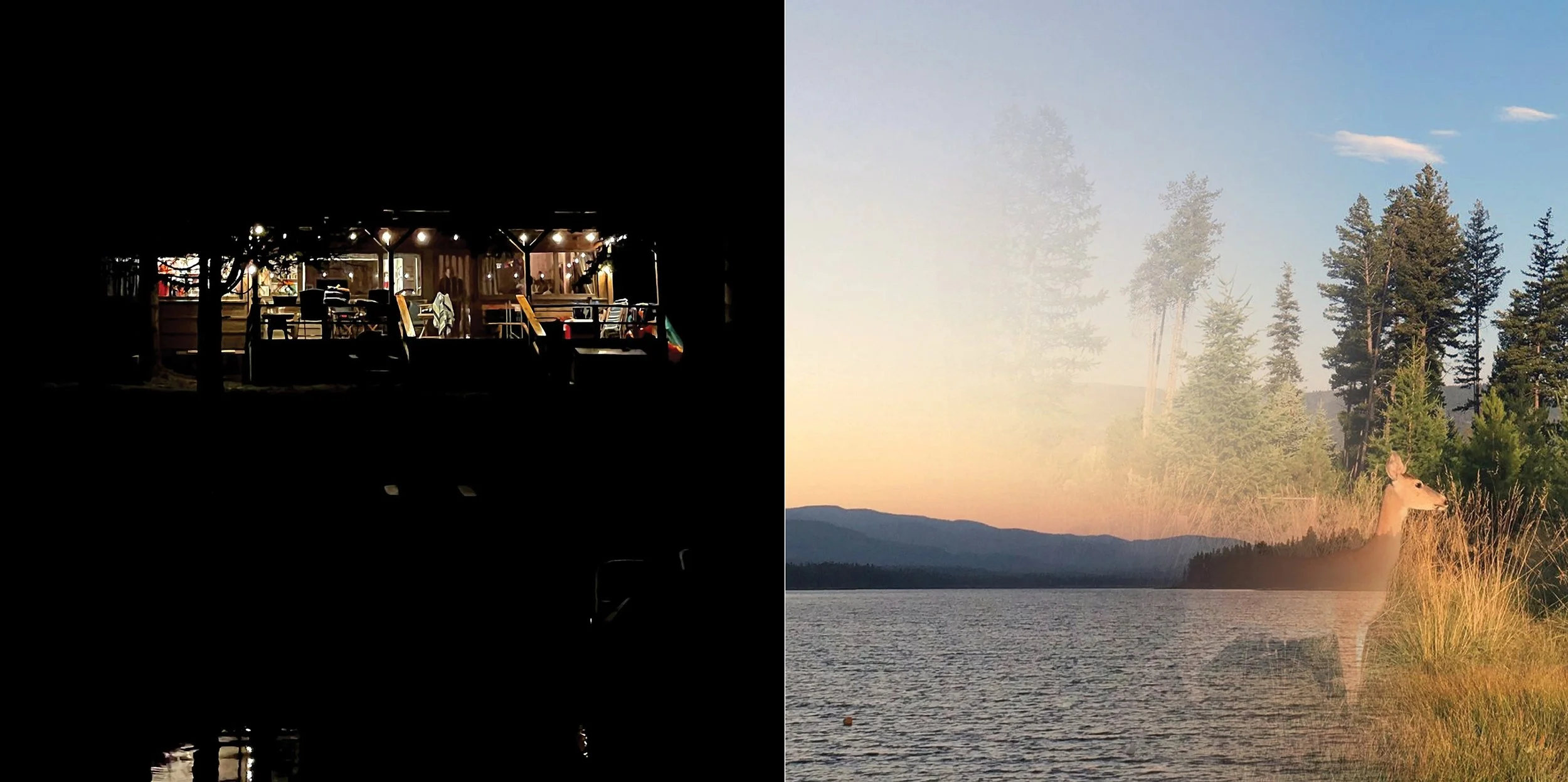
Dusks :: Photographs – Diptych

Songs :: Learning to Fly by Tom Petty and The Heartbreakers, Birdland by Weather Report, and Here We Go by Joe Walsh

© C. Davidson

Longfellow Boom

 
Boom

Every so often there are loud booms near the river in South Minneapolis. They seem to happen monthly and usually at night. They’re loud if you’re outside, or your summer windows are open. I’ve heard them for years but have never had a conversation with anyone since we’ve lived here. It wasn’t until I joined Nextdoor years ago that I read posts about the booms with the same questions posed every time. “Did anybody else hear the boom last night?” “Where do they come from?” “What are they?” Those are followed up with the same answers every time that range from, “it’s probably a sewer gas explosion down by the river,” “maybe a transformer blew,” “the nearby trains,” “fireworks,” or “the military.” Then the thread veers further away into Hilary’s emails, anarchists, crime, or Obama’s citizenship.

City council members, the health department, the police department, ballistics experts, and the FBI, don’t have a clue what causes the booms, at least no one has come forward publicly to confirm anything. Investigative journalists haven’t discovered any answers either, only further speculation. There was even a triangulation project commissioned between the city of Minneapolis and the airport to discover the location of the booms. Despite the precise monitoring technology that was used, they never found the source.

In the meantime, there will be an uplifting post by someone on Nextdoor notifying people that their cat has been found or thanking neighbors for shoveling a path across their front yards, from home to home, through deep snow because it makes it easier for the mail delivery person. The later post devolving into a thread of anger, suspicion, and lecturing. Someone will explain that they don’t shovel a path because of how it might affect their spring lawn and wish other people wouldn’t either because it makes them feel guilty and targeted since they choose not to. ”It’s ‘divisive,” they say.

Then a different person will post a non-sequitur saying that people shouldn’t walk in the alleys. That turns into arguments about race, thieves, car jackers, and how Minneapolis has become unlivable because of the unhoused, and an increase in stolen lawn ornaments. Turns out the person walking in the alley was a new neighbor most people on their block hadn’t met yet. He was looking for the discarded lumber and shelving he noticed days earlier that someone had set out. He thought he might be able to use the items since his house was unfurnished. The misunderstanding was never clarified, and apologies were never posted because Nextdoor has become another venue for the frustrated, bored, and unheard to vent their agendas. It’s like a mashup of Foghorn Leghorn and Lord of the Flies, complete with neighborhood moderators drunk with keyboard power and still, no one knows what causes the booms.
— — — — — — —

“A thought often makes us hotter than a fire.” :: Henry Wadsworth Longfellow

— — — — — — — 

Songs :: If You Want Blood (You’ve Got it) by AC/DC, and Angry by The Rolling Stones

© C. Davidson

John and Lill


We lived next door to John and Lill for decades and they lived in their house since the late 1950’s and raised three boys. When we moved next to them, their sons had long since left and had families of their own. Lill was born and raised just a few blocks away and never desired to leave the neighborhood. John is originally from Boyceville, Wisconsin and always wanted to move out to the suburbs but they never did. He was a quiet man, but not a shy man. He was always very warm with us and acknowledged all the neighbors who crossed his path. We talked a lot about the things next door neighbors talk about like cutting the grass and if we plan to mulch it, bag it, or let it fly that day, why our lawn mowers are burning more oil, squirrels and the damage they do, illusive hummingbirds, his sore knees, my sore back, the heat, our kids, and the duck his family had as a pet in the nineteen-seventies.

Sometimes John and I had conversations on our shared alley driveway and by the time we finished, we would have traveled five to seven feet. After many years of this, it finally dawned on me what was happening. He was slowly backing up while we talked, and I was slowly advancing to maintain the same relative distance. His slow-motion retreat was an intentional, defensive move, because I was chatty, loud and invading his personal space. Eventually he would say, “ok, you’re busy and I have to go now,” then turn and disappear inside.

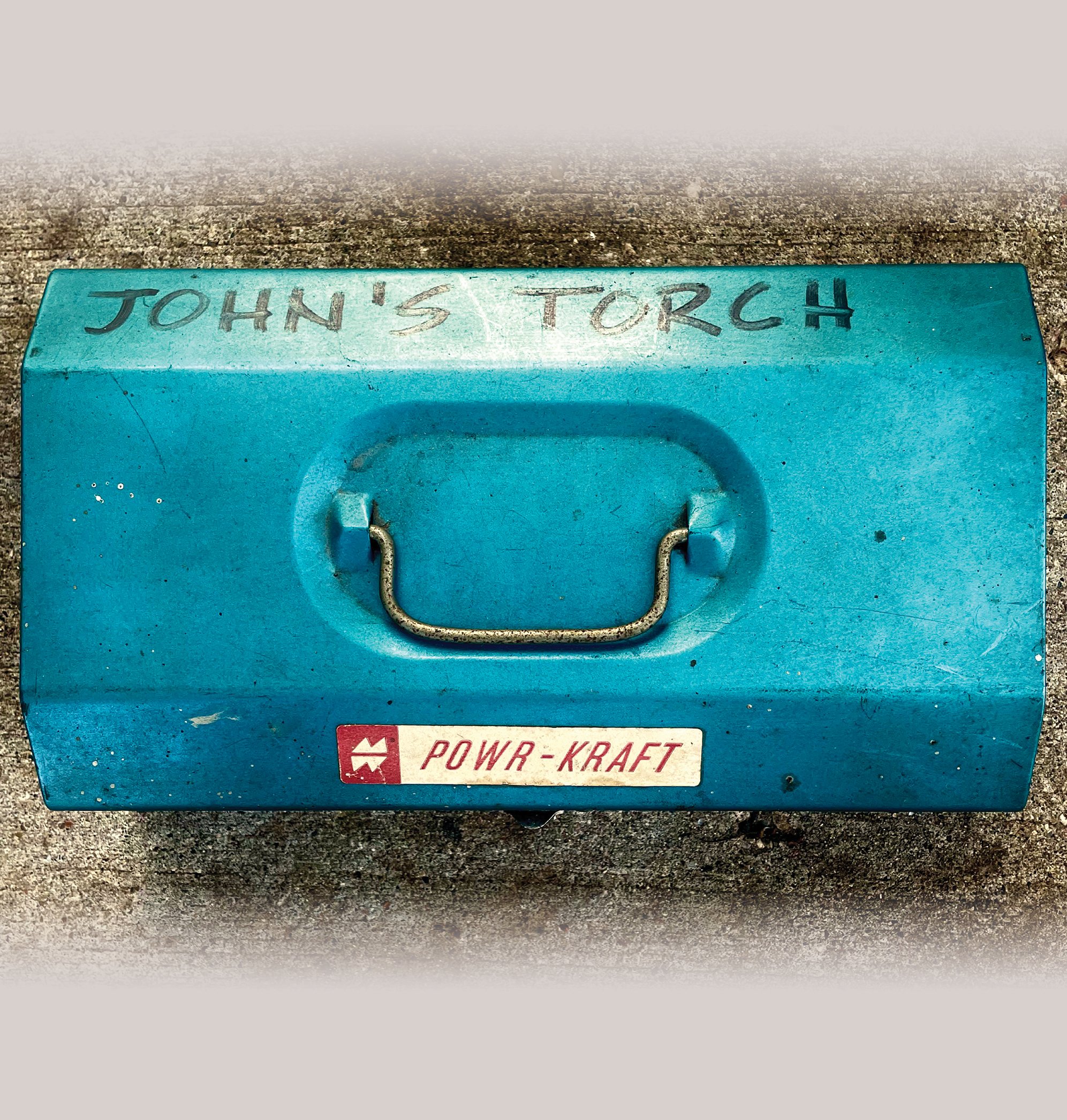
I realized one afternoon while I was in our backyard that John was a smoker. The smoke drifted over the fence, followed by him exiting their garage moments later. I mentioned that I didn’t realize he smoked, and he said, “yeh. Lill is happier when I don’t smoke in the house.” Once he learned to trust me after a few years, he’d invite me into their garage periodically to talk about a small appliance he was fixing, show me his collection of lawn mowers, or offer me an old tool that he didn’t need anymore. I usually declined and thanked him, but during his last few years, I always said yes. I finally realized it wasn’t about whether I wanted whatever it was. It was about accepting his gift.

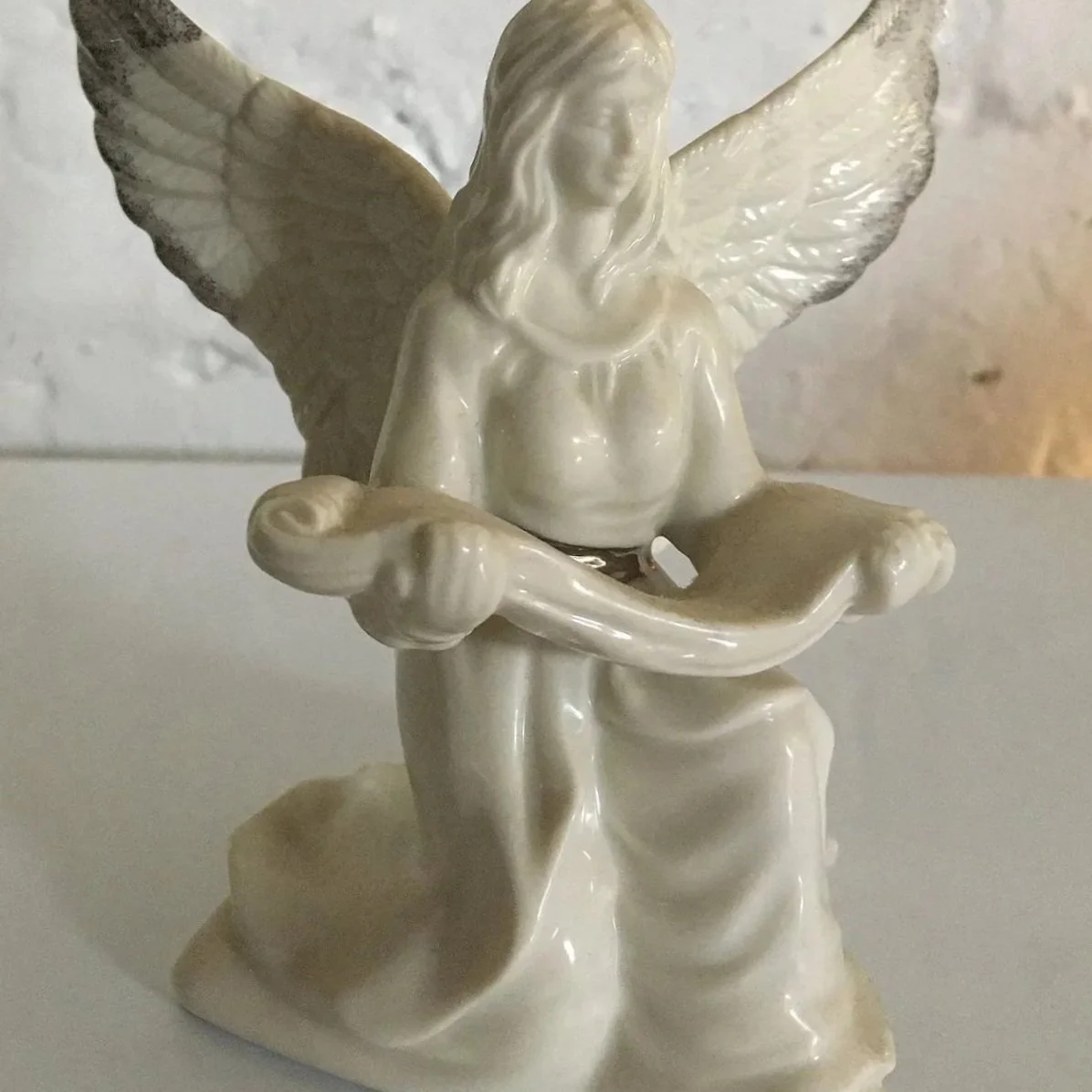
In the years after John passed away, we spent more time visiting with Lill and helping with small tasks. Sometimes she sat on her deck dosing in the afternoon sun. If one of us was in the yard, she might wave us over to talk about her garden, or her favorite crimson hollyhocks that were taller than all of us. The last time I sat in the sun with her she asked me to join her inside for a minute. We walked through the kitchen, into the living room, sat down and she turned on the nightly news. Then she pointed to her collection of small ceramic angels and explained where a few of them came from. She wanted us to have one, so I should choose. Then she turned her attention back to the television, and I looked for the plainest angel she had. It was white with silver accents. When I showed it to her and asked if this one was OK to have, she smiled and said, “perfect.”

Songs :: In My Life by Johnny Cash, Fish and Whistle by John Prine, and Transcendental Blues by Steve Earle

© C. Davidson

Invisible Future


Carr Haus Cafe was a campus coffee shop located on the first floor of Carr Haus, a building perched halfway up College Hill on the corner of Benefit Street and Waterman Street in Providence. It’s directly across from the very first First Baptist Church in America from 1775, and adjacent to the school’s nature lab where students spend entire semesters drawing natural history specimens. The second and third floors of the building contained individual painting studios for senior undergraduate students. My wife was in the graphic design program too and she worked at the cafe. We didn’t know each other and had never met while we were in school, but I frequented the coffee shop so it’s very likely we touched hands at some point while exchanging money. We met six years later. We ended up in the same city, connected through a mutual friend, and eventually got together at my apartment–studio to look at each other’s work. Then we went to dinner at the Uptown Cafe and talked about our common experiences, design courses, specific projects, professors, restaurants, and stories about people we both knew.

She said she recognized me from the design department and from Carr Haus because she worked there. She recalled an interaction with me ordering coffee and after paying for it I walked over to the condiment counter for cream. When I discovered there wasn’t any left in the creamer, I repeatedly flicked the aluminum lid and just stared at her like a blinking penguin. She interpreted my passive aggressive behavior to mean, the creamer is empty, and you need to fill it. I told her that wasn’t me and that I’ve never flicked anyone’s empty creamer and especially the one she was responsible for keeping filled. We disagreed about her memory for years. Sometimes it resurfaces when someone asked us how we met. “So, did you meet in Providence?” “No, we actually met here, and…” After many years, we realized that she was confusing me with someone else. He was an undergraduate student one year ahead of her and we resembled each other. We both remembered him, and I’m convinced he was the lid flicker because he often blinked like a penguin when I interacted with him.

Attending this school was one of a few options I had, and when I chose it my undergraduate professor/advisor was not happy. She asked me to stop by her office one Friday afternoon to discuss my decision and told me I might regret it for a variety of reasons. She thought one of the other programs was a better choice. I didn’t agree, so I outlined my reasons, like curriculum and each school’s bigger focus. Mostly though, it just felt unexplainably right because I had an overpowering ‘feeling’ that it was the place I needed to be the following fall. It’s tedious to defend a feeling, even scary and embarrassing sometimes, but they’re usually right. Today when I imagine making a different choice more than forty years ago, I almost shiver. How devastating it would have been had I attended a different school. I wouldn’t have met her. I wouldn’t hear her singing and working upstairs. We wouldn’t have a daughter exploring the world. Our families, friends, places, adventures that have changed us, our loyal pets, and this quiet life in our small house on a street near the river and a creek wouldn’t exist. It feels like providence. It feels like everything.

Songs :: This Must Be The Place (Naive Melody) by Talking Heads, Private Idaho by The B-52’s, Fast Car by Tracy Chapman, Free Fallin’ by Tom Petty and The Heartbreakers, Steady On by Shawn Colvin, It Never Went Away by Jon Batiste, and She’s A Mystery To Me by Roy Orbison

© C. Davidson

Measuring Up :: [Supplemental]


Measuring Up :: Photograph – Size Variable

Songs :: Nervous by Melissa Etheridge, Make Me Wanna Holler by Meshell Ndegeocello, Build Me Up From Bones by Sarah Jarosz, and Me In Honey by R.E.M.

© C. Davidson

Hot Pots


Galaxies :: Image – NASA-JPL-Caltech

River

My favorite part of where I grew up was that it was never far to a wild place. Some of those places seem ordinary like where the Missouri River passes through endless, dry prairie with abrupt cut banks and cottonwoods lining its route, or even the steep dramatic river bluffs on the north end of my hometown where the Corps of Discovery had to portage their boats. When I lived in southern Montana it was more dramatic. I was surrounded by mountains only a mile from town and it was a short drive to the north entrance to Yellowstone National Park where accessible hot pots were located. It only takes seventy-five-minutes to drive there, which can be trimmed if it’s 1:00am and the roads are dry. A friend told me that it’s not the same as it was when we went there decades ago. It was natural then because only the locals and nearby locals went there. She said now it’s more developed with infrastructure and user-friendly features.

The turn-off from Highway 89 leads to a short, unmarked gravel road which ends at a trailhead parking lot. It’s a small, packed dirt clearing that accommodated ten cars and each spot was designated by a large boulder, like curb stops do in town. Whenever I went with friends, we were the only ones parked there and it was the same on that night. We all piled out of the car and put our coats back on because it was the middle of winter. It was snowing gently, we were chatty, happy, and walked single file because the trail was narrow and flanked by head high bushes and dense undergrowth. After a few minutes, we heard rustling up ahead which quickly turned into crashing, and within seconds an enormous bull elk ran across the trail twenty feet in front of us. It was shocking. We were momentarily frozen in place while mumbling expletives repeatedly, even some yelling while the elk disappeared into the darkness and the crashing noise faded.

It was a five minute walk to the hot pots from the car. The closer we got, the louder the river became, which forced us to raise our voices while we stood next to it. It seemed darker there too, with just enough ambient light to see each other, the falling snow, dim river boulders, and hazy streaks of white water. Once we all disrobed and stuffed our clothes and shoes inside our jackets to keep them dry, we walked down the slope and stepped into the steaming pools. There were three of them connected with waist high water with the bottoms covered in small rocks. Each pool had a different temperature that ranged from very warm to hot. Everyone sank slowly into the water to get used to the heat, and found smooth submerged boulders to sit on. With only our heads showing, we disappeared and reappeared through the thick steam the entire night. After a while someone said, “You know, we’re not just seeing stars, we’re seeing galaxies too.”

— — — — — — —

"The night. The stars. The river." Edward Abbey – The Monkey Wrench Gang

— — — — — — —

Songs :: Livingston Saturday Night by Jimmy Buffet, Home by Bonnie Raitt, Nightswimming by R.E.M., and Have You Seen the Stars Tonite by Paul Kanter and Jefferson Starship

© C. Davidson


2023 Ritual Burn :: [Supplemental]


2023 Burn Remnants

Songs :: Looking Too Closely and Sort of Revolution by Fink, Something You’re Going Through by Graham Parker, and Tell Me All the Things You Do by Fleetwood Mac

© C. Davidson