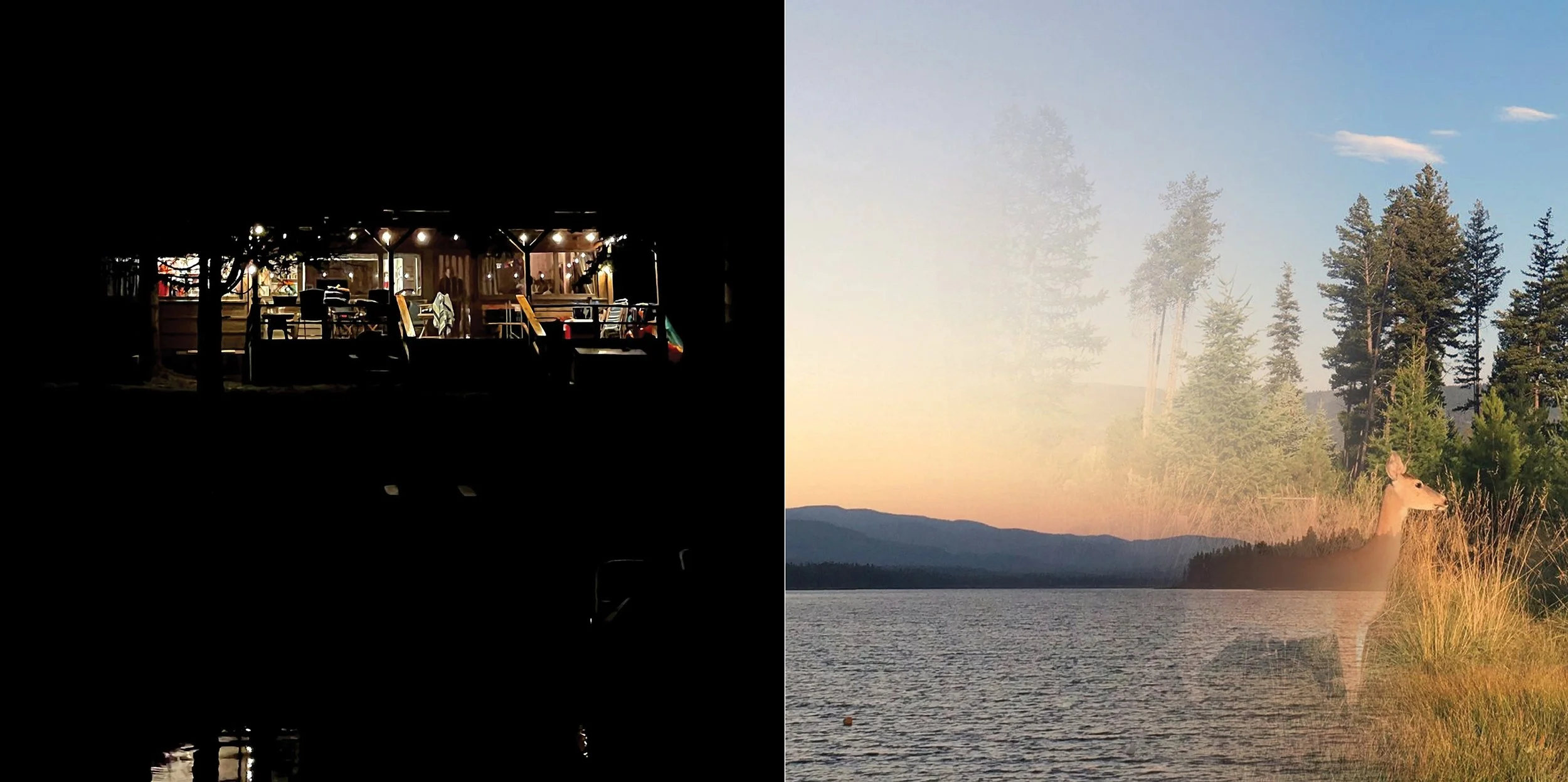
She called me from the cabin and I could hear her friends’ voices in the background. I pictured them gathered in the kitchen, or around the coffee table near the stone fireplace working on a puzzle. I sipped afternoon coffee on our deck a thousand miles away next to the Goldenrod and Black-Eyed Susan’s growing next to me. The sun disappeared behind our broad green umbrella while she told me about their day and revelations about our relatives and their connection to her friends in the room. Clouds dimmed the sun, my coffee cooled, and I remembered when she was four and we talked through cans connected by a string. We nested in her fort built of sheets, blankets, and chairs and lit the inside with two flashlights and one small battery lantern that cast shadows and shapes that moved and changed.
After we shut down her fort for the night, we usually read two books from our standard rotation of dozens. One was often a longer Dr. Seuss book, or a chapter from the one about the people who made doughnuts because the illustrations made us crave doughnuts, and sometimes we read Old Hasdrubal and the Pirates. I usually hid the later book at the bottom of her large piles of books after she fell asleep because I didn’t like to read it. I couldn’t pronounce the protagonist’s name easily, and I was uncomfortable with the story. I thought maybe she’d forget about it, but it always reappeared because she’d found it. She never asked me where it was and I didn’t admit to hiding it. Then she’d get into her bed, settle in and reflect on her day. Sometimes we told each other the stories we’d invented together.
One involved an enormous village of mice that lived in our detached garage. They were quiet by day and active at night. Our visits were random, but they’d always be there and seemed to expect us. We didn’t interact with them much. We’d sit for a long time though just watching and clapping while they performed with miniature acrobatic equipment, circus animals, and special lighting effects.
Another story involved a small family of deer that lived by the lake near the family cabin. Sometimes we’d see them when we canoed close by. There were large areas of lily pads and shallow grasses near the shore that brushed against the bottom of the canoe, so they always heard us before we saw them. Just beyond the beach was a doe, a buck, and a fawn staring back at us. They seemed to expect us just like the mice did. They usually invited us to join them, so I beached the canoe and helped my daughter out. We walked to a small clearing not far from shore, protected by pine trees, huckleberry bushes, with two logs for sitting. The buck stood at the opposite end of their cozy clearing watching us, and the doe and fawn laid down in the soft, thick grass in front of him near their well-tended fire. The doe asked us questions about our cabin, others in our family, and how long our visit was this year. We asked them questions about their daily routines, if they’d visited Morrell Falls, or the giant Larch tree recently, and if anyone else knew they lived here. They said no one else knew and if other people passed by they became invisible. We never asked how they could magically vanish because we didn’t think it was unusual.
Songs :: Plains (Eastern Montana Blues) by George Winston, Side Tracked by Dave Mason, Here We Go by Joe Walsh, June Hymn by The Decemberists, and Cool Water by Joni Mitchell
© C. Davidson