Grind My Stone


Occasionally somebody would blurt out, “I need to go grind my stone.” “We told you the lithography class was going to be a pain in the ass” one of us responded. Whenever I walked through the lithography end of the print lab, I’d look over at the presses and worktables and see someone scowling and slowly grinding their stone. It didn’t look enjoyable. Eventually though, I’d see a beautiful print they’d completed weeks later, and if I was lucky, I’d get to see them smiling while they peeled the thick paper from their stone. Then they’d get to reprint it and reprint it again.

My friend was a print maker and a ceramicist. Sometimes his lithographic prints defied the thick hard stone they came from because his images were soft and overpowered any kind of limestone I could imagine. Another friend was mostly an intaglio printer. He used found photographic material and created black and white photomontages which he then exposed to light sensitive film, exposed the films onto a photo-sensitive aluminum plate, then etched it in an acid bath. He also drew directly onto the metal plate to scratch-out or add details. Eventually, he used the plate to make black prints onto thick rag paper. They were beautiful and dense. Sometimes they were political, sometimes they were domestic images oozing with melancholy.

I’d often find him sitting on a stool at one of the long wood tables in the central print lab. He was usually humped over his plate, revising it, or manipulating the films he used to expose his plates. His ear buds were usually in and likely listening to Lou Reed or David Bowie. He’d look up and give me a friendly nod if I was just passing through, or I’d sit for a few minutes to talk.

One Saturday evening I was alone in the painting studio on the second floor. During weeknights there were often other students painting, but after midnight, or on a Friday and Saturday night, I was usually alone. I was sitting staring at a blank white canvas. I had just finished applying the last coat of gesso the day before. My friend walked in, greeted me and sat next to me. While we sat there, he scanned a few of my paintings that were around and then settled on the large blank canvas I was about to work on. “I don’t know how you do it.” “Do what?” I said. “How you’re able to stare at a white surface and just start painting without a specific plan”. I asked him why. “Because I’m uncomfortable with the immediacy of it, that’s why I make intaglio prints. I develop a plan and the process takes a long time before the image is printable. It gives me the time to get comfortable with it.” I understood what he meant and explained that I’m usually too impatient.

I’m most comfortable with something I can immediately react to. That’s why I used house paint along with traditional oil paints. House paint allowed me to inexpensively obliterate areas of paintings I didn’t like. That conversation had a huge impact on me. I’d never heard another student reveal themselves in that way about making art, about the reluctance and fear—how the emotional part of the art making process had the biggest impact on what we made and how we made it.

For Ed S. and Dave J.

Songs :: Bottoming Out by Lou Reed, Without You by David Bowie, and the entire Comes a Time and Rust Never Sleeps albums

© C. Davidson
Four Generosities


Until I launched this site, most of my finished work was rarely seen by someone other than myself, friends, or my wife and daughter. Sometimes a piece is in an exhibition, or viewable online, or in an annual studio crawl, but that was the exception. So, I don't really have a sense of how people most consider it. Occasionally though, I experience someone's response more directly.

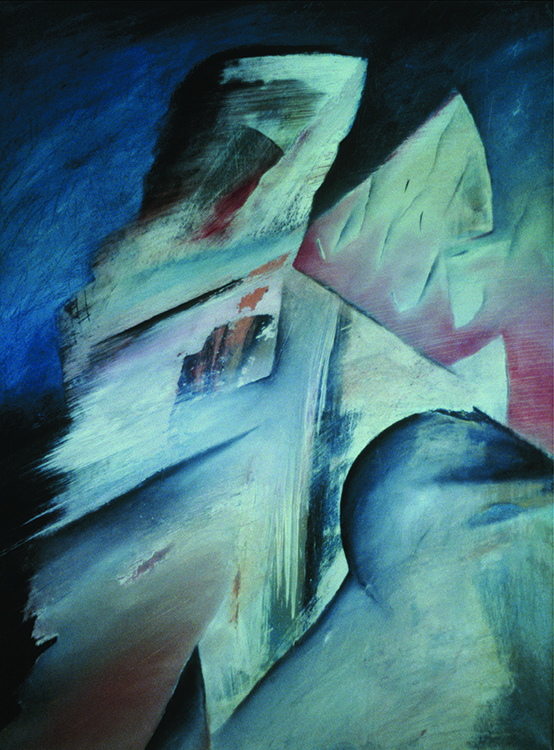
One :: During my first year of undergraduate art and design school, I painted a lot at home outside of my regular coursework. I entered one of those paintings in spring to a juried exhibition in my hometown called Art in the Park. It was a mixed-media piece on paper. I don't recall if I saw the exhibition, or attended any events connected to it, but after it was over my parents collected the piece for me. My mom called to say that a neighbor who lived down the block from them had seen it in the exhibition and asked if it was for sale. She said that she stood looking at it for a very long time and wanted to own it. I’d never heard a response like that about my work, especially from someone I didn’t know. My mom told her she’d ask me. When we spoke about it, I got the feeling that my folks liked it too, so it’s been hanging on their living room wall ever since. For a few years afterwards, when I stayed at my parents’ house, sometimes I’d see that neighbor drive down the street and we’d wave to each other.

Two :: A female tenant who lived in the same building as my brother and sister-in-law above Bernices’ Bakery in Montana, walked into their apartment and saw the painting I’d given to them called Wanderlust. At some point during her visit, she said, "I want to make love to that painting." It must have been shocking to hear. I was flattered when they told me what she said. No one had ever said something that provocative about something I've made. It would have been overwhelming to see her do that. How would that even work?

Three :: During an ‘open studio crawl’, I heard someone enter my studio during a relatively quiet time on Saturday afternoon. I was in the back working, so I looked around the corner to greet whoever it was. An older woman was standing alone in front of one of my paintings called Full of Birds. I didn’t say anything and after a minute she quietly left. Awhile later, I heard someone else walk in and found the same woman standing in front of it again. This time she stayed much longer, so I approached her, introduced myself and asked her if she had any questions. Her eyes were full of tears. I asked if she was alright and if she needed anything. She told me she was fine. Her son had been very sick, and this painting brought it all up again and soothed her at the same time. We stood together in silence, then thanked each other and she left.

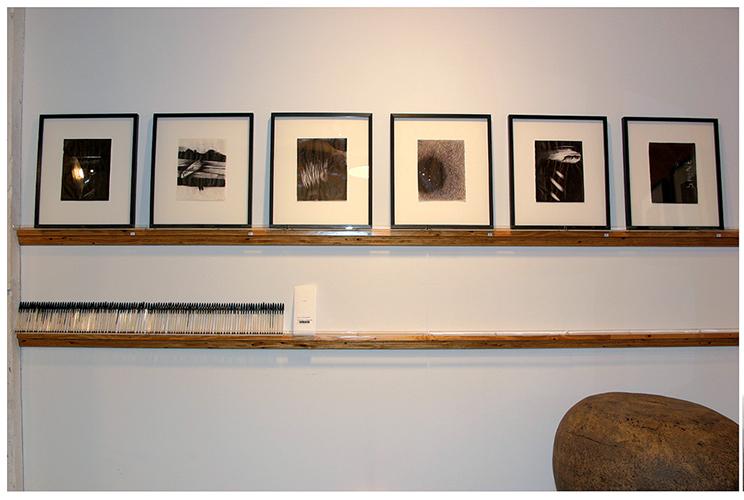
Four :: A young couple was looking at my work during a different ‘open studio crawl’ and spent most of their time in front of my ink drawings. They’re 11” x 8.5” and float within 20” x 16” frames. I noticed them among a group of people and asked if they had any questions. They said they liked looking at photographs and enjoyed taking pictures themselves. They couldn't figure out what kind of photographic prints these were, what kind of paper I am using, and how they were made. I wasn’t following what they were saying. Then I realized they thought my drawings were photographs. "Oh, these are ink drawings—ball point pen drawings" I said. Then they seemed confused, so I pointed to all the used Bic pens that I had on display. I was thrilled that they thought my drawings were something else. Our encounter led to a long conversation about perception and art.

Songs :: I Will Follow and October by U2, Court and Spark by Joni Mitchell, Good Times Roll by The Cars, and Tales of Kilimanjaro by Santana

© C. Davidson


My Head Almost Exploded at the Van Gogh Museum


Wheat Field With Crows :: 1890 – Oil on Canvas – 50.5 x 103cm :: Image – Van Gogh Museum, Amsterdam

Vincent Van Gogh created most of his work over a ten-year period — all that amazing work, including his stylistic transitions, within a single decade. Not to mention that many of his most famous paintings were created within his last year, like Starry Night. I don’t remember those facts from my art history classes in college, but I read it on a gallery didactic panel and in a gift shop catalog. I’ve been a fan since my parents bought me a book of his work for Christmas when I was in seventh grade. I don’t remember if they did because I’d mentioned him, or if they wanted to introduce me to his work. Either way, it was inspirational and shocking, not because it mentioned the story of his bandaged ear, or because of his emotional struggles, but because he painted wheat and wheat fields, wrote about wheat fields, and I understood wheat fields.

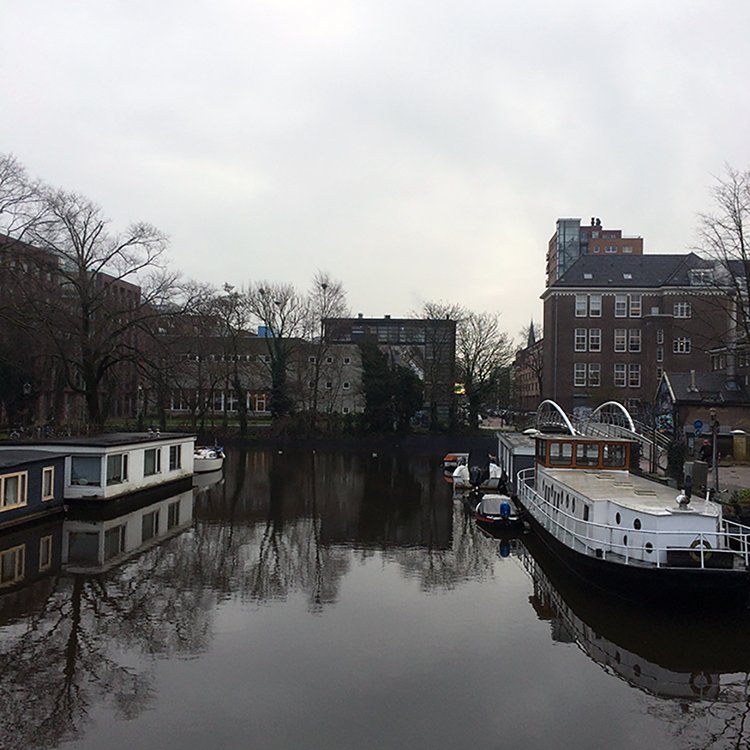
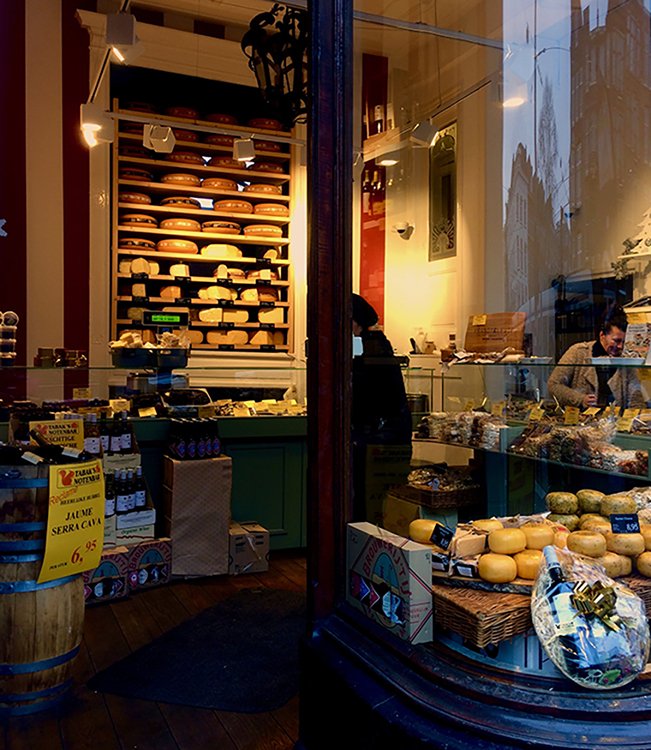
Almost forty-five years later just a week before Christmas, my wife and I left for the Van Gogh Museum from our rented apartment in Amsterdam. It was a cool, gray, drizzling day. We walked next to and over the canals which reminded me of the movie Hans Brinker and the Silver Skates. We saw dreamy Dutch architecture, thoughtful design, bread and cheese bathed in the honey light of deli storefronts, and bicyclists everywhere. I’d imagined visiting Amsterdam and the Van Gogh Museum for a long time, but I didn’t imagine that it would feel this good. It was off-season and the museum was still busy. Sometimes we’d need to take our turn to stand in front of certain works, like The Potato Eaters, Sunflowers, or Wheat Field With Crows. It’s hard to remember the full experience because I was overwhelmed. There’s a lot to absorb and process in the museum, including the texture of his paint, and which brush strokes are underneath, and which are on top.

Seeing his work in person, along with the other Impressionists whose paintings, drawings, and stories are also exhibited, placed all of it in context. We wandered through the museum for hours. In one of the final galleries, I came across a few of his paintings that felt like a series. All of them were landscapes and focused on wheat fields. I alternated between sitting on a bench in front of them and standing as close as I could get to inspect their surfaces as a guard would slowly appear to make certain I didn’t get any closer. While I stared, I remembered my unfinished painting currently sitting on my easel back home. It was a view of a wheat field through the moving curtains in a window. I got goosebumps and felt even more connected as I saw my wife slowly walk by Sunflowers that hung on a deep blue wall.

For Jeenee and Seeley

Songs :: Amsterdam by Mary Gauthier, Solo by Hanah, and Everything In It’s Right Place by Radiohead

© C. Davidson

The Same Hat

 
James Lloyd Huffman :: 1960’s

James Lloyd Huffman :: 1960’s

My grandfather plowing the fields of the Huffman homestead near Highwood

My grandfather plowing the fields of the Huffman homestead near Highwood, Montana

I’ve been working on a painting for over four years. Not daily, or even monthly, instead, I go through concentrated periods when I do and then I don’t. I usually have other paintings in progress too, but this one sits on a couple of five gallon buckets and leans against the wall. I try to ignore it, but it's five feet square so it's difficult to overlook. I currently call it Hat, Boat, Plow, because that’s what the images are, but usually it’s just the The Heaviest Painting I've Ever Done. It has so many layers that someday I’ll need to remove the canvas from the frame in order to transport it easily. During these years, it’s been many different things with different intentions, and each time most of it gets painted out to white. I can’t figure out what it’s supposed to be and I’m never happy with what it is. Sometimes it’s an albatross. Sometimes it’s a source of anxiety. Sometimes it feels like an opportunity. I'm still undecided and figuring it out.

Typically when I sit and stand in front of it, looking at it, over-analyzing it, bombarded by internal chatter, I try not to think and just paint but it usually turns out to be a dead end. Thinking and painting never mix and for some reason I can’t stop thinking with this one. Then one night I had an epiphany. Maybe I wasn't supposed to figure it out, or finish it. Maybe it’s supposed to be an ongoing experiment where I can just try things without expectations. I'm more comfortable with that idea lately, just keeping at it and not sabotaging it.

Last fall in the early morning hours, I was cleaning up and glanced at the painting and out of the corner of my eye and noticed a wrapped package of old artwork nearby leaning against my flat files. I had brought the work back from Montana. It contained a few projects I did in high school. One of them had been hanging on my bedroom wall from my youth and a few others were stored in my dad's studio. After I saw the package, I unwrapped it and pulled everything out. I leaned one of the pieces up against the canvas and sat in front of it. It's a black ink drawing on a piece of 36" x 30" white illustration board. It’s a montage of a wheat field, a fence line, a windmill, my grandfather on his horse drawn plow and a large head and shoulders portrait of him wearing his gray, felt hat. The portrait was copied from a photograph someone took of him during the late sixties. The drawing was completed for a class assignment about storytelling. It was an homage to him with all of the images blending into one another like a kind of movie-poster. Then I looked at my unfinished painting which is big enough to fill my field of vision when I’m close enough, and realized it's the hat — it's the same hat! It felt like the forty-year-old drawing could have been a study for the painting — both about farming and Montana. At that moment a lot of things aligned and made sense, reminding me that I don’t need to think.

For the Huffmans

Songs :: Bless the Weather by John Martyn, In the Country by Mission Mountain Band

© C. Davidson


Shotgun


Riding Shotgun :: 2011

I was driving east through North Dakota the day after Christmas. It was dark, cold, the road was snow packed, and I was in a blizzard, when my friend and ex-sister-in-law called. I answered, said hello and once she said “Hi!”, I asked if she would hold on for just a minute. I muted my phone, the hairs went up on the back of my neck, and my eyes filled with tears. I couldn't believe it was her of all people calling me at that moment. I got back on, and she asked me how I was, where I was and said that she'd been wanting to talk with me since my mother’s funeral almost two months earlier. Her call felt like divine intervention. We caught up with each other and then she simply listened to my grief.

I’d spent a few days in Montana during the Christmas holiday with some members of my family, while my wife and daughter were in Florida to be with her family. I drove to Missoula purposely avoiding my hometown, specifically my mom and dad's house. It would have been too much, still like a funeral home filled with certain flowers my mom wouldn't have liked. Like when certain songs were chosen for her service that had no real connection to her. The music was more about the people who chose it than it being for my mom, like Danny Boy. She wasn't Scottish, or the Springsteen song Missing that I asked to be included. I don’t remember her once saying she was a fan of the Boss. It’s a great song, but that was about me, not her. The house might feel like those parlors filled with deep sadness and a ticking clock, so I drove to Missoula where some of my siblings either lived. We went out to dinner, and I visited with a nephew’s family the following day before heading home.

I looked forward to the return trip because highway driving is always therapy—my shoulders relax, and I feel lighter. Seeing family was good, but the drive was the main reason I went—it’s the mulling, the thinking, the re-thinking, the re-mulling, the talking out loud, the looking, and the picture taking that heals me. Maybe a little like the Cat Stevens song On the Road to Find Out. After my sister-in-law and I said goodbye, I drove out of the lead edge of the storm where the interstate was eventually dry, and I took the photograph Riding Shotgun with my mom next to me.

For Mom and Janet

Songs :: On the Road to Find Out by Cat Stevens, Joanne by Lady Gaga and Dear Mama by 2Pac

© C. Davidson


Interpreting Wink


Wink :: 1980-1981

When I think back, I realize that many of my paintings from college were figurative. I didn't think of myself as a figurative painter then, or do I now, but sometimes they felt like the focus of the painting. I'm not particularly good at drawing the figure. I did participate in a life drawing class a couple of years ago though. Once a week in the evening for about eight weeks, with 10-15 other folks, I drew a model for a couple of hours They took donations at the door to pay the facilitator and the model. I drew men and women on large pads of newsprint with charcoal, graphite and chalk. During the two-hour session we'd get to draw ten to twelve poses, with a range of 1 to 30 minutes. Over the course of the session, I came out with a couple of drawings that were OK, and most of them weren’t.

Whenever I've played Pictionary over the years and was required to draw a figure, human or animal, they were chaotic scribbles that took me forever. My teammates usually just stared at the drawing and then at me in disbelief. "I'd need to be a clairvoyant to guess what you're drawing." I was better at drawing things like wind. The figures my father drew were crisp and clear. He always captured the action quickly and precisely. "It's a person raking the yard, um… it's a person watering the lawn!" “Yes!”

Wink was a painting I did in undergraduate school. Somehow it turned into a head-and-shoulders thing. It wasn't a very good painting, but I treated the figure in a way I never had before, so I'd always held on to it for posterity. I shipped it home from my parents' basement in Montana years ago. It’d been in storage for at least twenty-five years. Once it arrived here, I unpacked it and leaned it against a wall in our living room. It remained there for a couple of weeks before my wife said anything. Eventually she asked me what the painting was about. I was surprised by her question. I wasn't surprised because she asked a question, but because of the question she asked. I assumed the image was so obvious to everyone that it would be hard to interpret it any other way. In fact, that was the primary reason I disliked it. It felt limiting. After I told her what it was, she said she still didn't really see it. Maybe. Kinda? I was relieved. It kind of changed everything. It reminded me to relax about what I think I'm painting because I often don’t know, and I can't usually control what it becomes anyway. Just painting is the point.

— — — — — — —

"I approach each project with a new insecurity, almost like the first project I ever did. And I get the sweats. I go in and start working, I'm not sure where I'm going. If I knew where I was going I wouldn't do it." Frank Gehry

— — — — — — —

Songs :: Moods for Moderns by Elvis Costello, Runaway and Home by Bonnie Raitt

© C. Davidson

Hal

 
Someone’s Always Leaving :: 1982-1983

Someone’s Always Leaving :: 1982-1983

Hal was one of my painting professors in undergraduate school. He was born In New York and arrived in Montana from the Bay Area where he grew up. He was handsome, tan, friendly and soft-spoken. I think he had been a surfer, too. His large paintings and drawings were aggressive and full of action. They were bright, complex, crowded and spacial. They were loaded and appeared completely abstract at first glance, but the longer and deeper you looked, the more figurative they became. He casually told me once that "there's no difference between abstraction and representation. It's only a matter of how the elements are assembled and how they relate to each other that shifts a piece one way or the other."

One Friday afternoon during Spring quarter, I met with him in the empty painting studio where I had set up a few canvasses. I sat on the base of a wooden easel leg and he sat next to me in a hard-backed chair. I don't remember exactly how long we sat there before either of us said anything, but It felt like a long time. I started to feel a little nervous and felt pretty certain that he hated them and was just searching for a gentle way to tell me. He finally said, "how's your love life?" I was surprised, even a little shocked, and eventually responded with "what love life?" "That makes sense," he said. I felt totally exposed and confused. They weren't figurative, or sexual, and didn't feel erotic to me in any way. None of that was what I’d been thinking about while I worked on them, but once he said it, I tried to look through that lens. It wasn't about literal figures, or symbols. It was about what he felt in front of them. That’s what painting was about for me then and now, and I still have to remind myself of that today. Nothing more was said about my lack of a love life and we continued to talk as if nothing had shifted.

For Hal

© C. Davidson